

StitchCore
Best Software for a Bespoke Tailoring Business (2026)
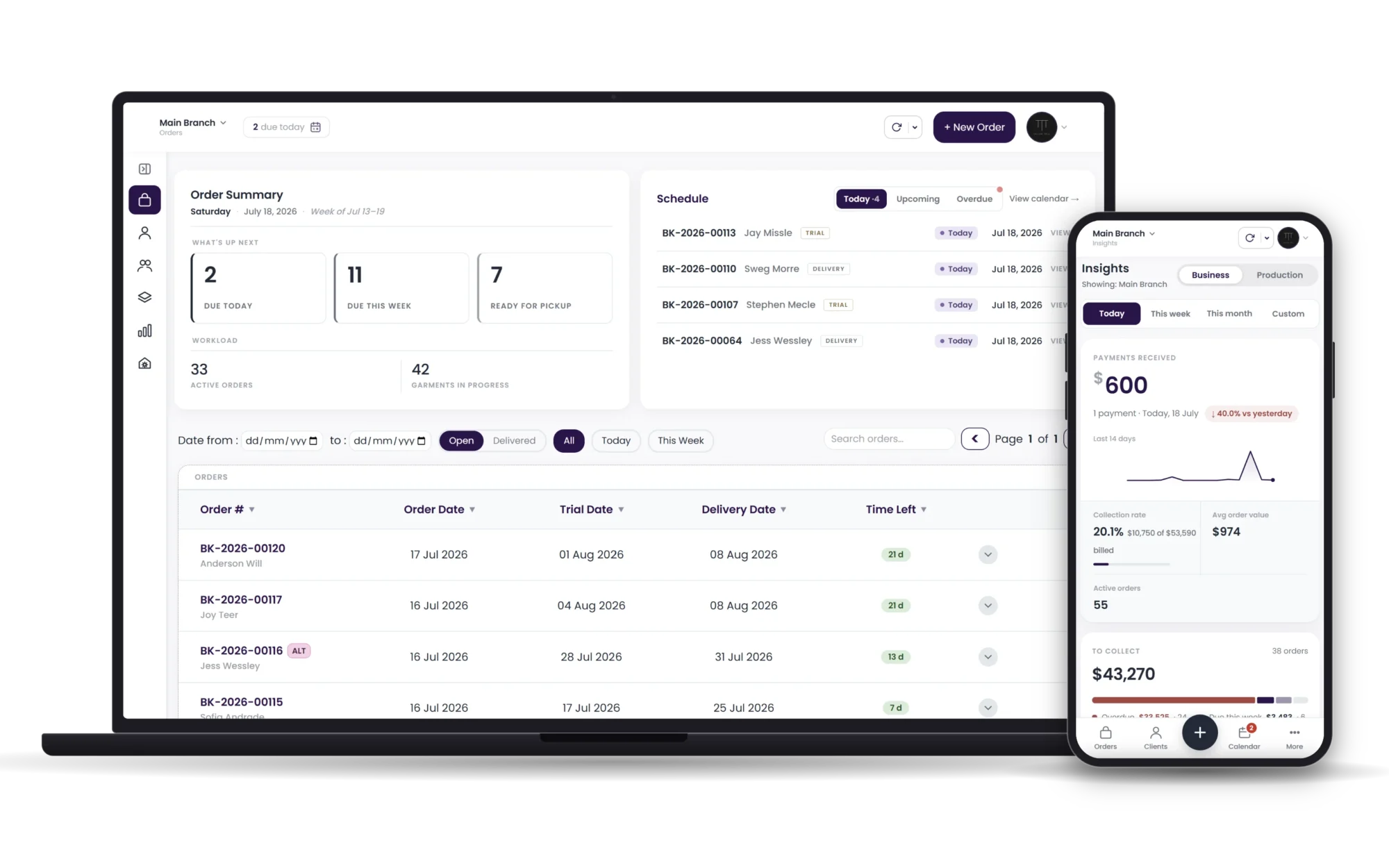
The best software for a bespoke tailoring business comes down to two questions most buyers only ask one of: does it hold the work the way bespoke actually runs, at the garment and not the order, and is the data underneath it genuinely yours, on your own isolated setup rather than one row in a database shared with everyone else. A retail till or a general CRM usually fails both. Search “best tailoring software” and you’ll meet four kinds of tool; only one is built for how a bespoke house works and where its data should live. Here is the honest comparison, and the tests that actually decide it.
The Four Kinds of Software You’ll Find When You Search
Almost everything that comes back for “tailoring software” is one of these four. The differences that matter for bespoke are simple:
| What it is | Built for | Where it breaks for bespoke | Fit |
|---|---|---|---|
| Retail / boutique POS | Selling stock: SKUs, sizes, reorder and sell again | An order is a SKU. No garment-level tailor, stage or trial date, no measurement sheet, no alterations round by round | Poor |
| Generic CRM (SaaS) | Contacts and deals | A suit, trousers and a sherwani collapse into one row; measurements and alterations go in a notes field; and your studio is one tenant in a shared database | Poor |
| Spreadsheet / paper order book | A list you control yourself | No memory across visits, no production view, no roles, so everyone sees everything or nothing | Stopgap |
| Bespoke-native, single-tenant | One order, several garments, made once | Built around exactly these things, on your own isolated setup | Made for it |
The first three can all be made to sort of work, the way a notebook sort of works. The real question is whether a tool passes the tests below, because those are the parts of bespoke that don’t exist in retail, and the questions about your data that a shared platform can’t answer well.
First Test: Does It Work at the Garment, Not the Order?
This is the one difference everything else depends on. To a generic CRM, an order is one row. In a bespoke house, a suit, trousers and a sherwani in one order are three separate pieces, often in three different hands, each with its own tailor, its own stage and its own trial date. If the software can’t track the garment, then the production view, the trial dates and the answer to “who is making what, and when is it due” are all guesswork. Garment-level, not order-level, is the line between software built for bespoke and retail billing with a new label.
Second Test: Is It Shaped to Your Shop, or a Generic Template?
Good bespoke software is configured to your house before you start, not bent into shape after. That means your garment types, your production stages, your measurement method and your own terminology, whether you cut menswear, womenswear, ethnic or ceremonial. What you don’t use disappears, so the tool never feels bigger than your business. A template that forces every shop into the same fields is how you end up with a notes field doing the real work again.
Third Test: Does the Client’s Memory Actually Persist?
A bespoke client comes back a year later and expects to be remembered. The best software makes that automatic: measurements saved once and ready on the next order, a client you can look up by phone or email to see measurements, notes and full history, and posture photos kept beside the sheet. The client gets an order-tracking page with no app and no login, and updates that go out already written. The value here is memory, not volume, which is why it matters as much for a house making a few garments a month as for a busy one.
Fourth Test: Can the Team See Only Their Slice?
Software the whole shop can use is software that doesn’t hand your master the manager’s screen. Look for ready-made roles where everyone sees only what their work needs: the floor scans the QR on the job card, marks the stage done, and never touches client contacts, charges or measurements, while pricing and revenue stay with the people you choose. That isn’t a settings preference you hope holds. In a tool built for this, least-privilege access is enforced by the system, and the owner still sees everything.
Fifth Test: Where Does Your Data Live, and Is It Yours?
This is the test most buyers skip until it’s too late. On most SaaS, your studio’s client list and order history sit as one tenant inside a database shared with every other customer. The stronger answer is isolation by design: each studio on its own dedicated subdomain and separate database, with no technical pathway from one studio’s data to another’s, an architectural fact rather than a policy promise. Your data stays yours, never sold and never turned into an advertising profile, with encrypted transport on every session and support access only when you ask for it. And because the foundation is your own, growth is a switch, not a migration: a second branch where staff see their branch and you see everything, and any currency you work in.
So Which Is Best?
The best software for a bespoke house isn’t the highest-rated one, because most of those ratings come from shops selling stock, rating a different job than yours. The best one is the tool that passes all five tests: it tracks the garment, it’s shaped to your house, it remembers the client, it gives each role only its slice, and it keeps your data genuinely yours. StitchCore was built to exactly that list, bespoke-native and single-tenant, from the order inward. If you make garments one at a time for one client at a time, that’s the shape you’re looking for. The full picture is on the features page, the deeper “what should it do” answer is in what software for a bespoke house should actually do, or get started and we’ll set your shop up.
Quick Answers
What Makes Bespoke Tailoring Software Different From a Normal CRM?
Two things. A normal CRM treats an order as one row, so a suit, trousers and a sherwani lose their separate tailors, stages and trial dates, and the measurement sheet, posture photos and round-by-round alterations end up in a notes field. And a normal SaaS CRM keeps your data as one tenant in a shared database. Bespoke-native software tracks each garment as its own piece and, done properly, runs on your own isolated setup.
Is My Studio’s Data Secure and Private?
With StitchCore, each studio has its own dedicated subdomain and separate database, so there is no technical pathway from one studio’s data to another’s, an architectural fact rather than just a policy. Everything your studio enters stays yours; it is never sold or used for advertising. Every connection uses TLS/HTTPS, access is role-based, and our support looks at your workspace only when you ask.
What’s the Best Software for a Small Bespoke Tailor?
The variable is memory, not volume. Even a handful of bespoke clients come back a year later expecting to be remembered, so measurements saved once and ready next visit is worth more at low volume, not less. The best tool for a small house is the one that remembers the client for you and can grow, a second branch or a new currency, without you ever moving your data.